Every few years, a new movement arrives and promises to change the way we think about food. Sometimes those movements genuinely do leave a lasting impact.
In the 1990s and early 2000s, molecular gastronomy challenged long-held assumptions about what ingredients could become. Kitchens embraced centrifuges, liquid nitrogen and techniques borrowed from the laboratory. Familiar flavours appeared in unfamiliar forms and, for a time, it felt as though the future of cooking had arrived.
A few years later, Nordic cuisine captured the imagination of chefs around the world. This was certainly the case when I started cooking. The focus shifted towards foraging, preservation, seasonality and an almost obsessive connection to place. Restaurants looked north for inspiration and suddenly ingredients that had once been overlooked became the centre of attention.
More recently, we’ve seen the rise of small plates, open-fire cooking, fermentation-focused menus and an increasing emphasis on informality. Dining rooms have become more relaxed, menus more concise and the relationship between guest and restaurant less formal than it once was.
Each of these movements has contributed something valuable. Yet throughout all of this change, French cooking remains.
Not necessarily in the dishes we eat, but in the principles that continue to shape how professional kitchens think.
For all the discussion surrounding trends, innovation and reinvention, much of modern cooking still rests upon foundations established in France centuries ago.
The System
One of the reasons French cuisine has endured is because it offered something larger than a collection of recipes. It offered a system.
Before French cooking became codified, kitchens often relied heavily upon tradition, regional knowledge and apprenticeship. Techniques were passed from one cook to another but there was little consistency from one kitchen to the next. French chefs changed that.
Rather than viewing recipes as isolated creations, they began organising cooking into a structured discipline built around technique, hierarchy and repeatable processes.
Sauces were classified.
Techniques were standardised.
Kitchen brigades were organised.
Knowledge became transferable.
For the first time, cooking could be taught systematically rather than simply observed and copied. Many of these developments are so deeply embedded within modern kitchens that we rarely stop to acknowledge their origins.
Whether a chef is working in Paris, London, Tokyo or New York, much of the language, structure and discipline they encounter can be traced back to French culinary traditions. The remarkable thing is that the system has survived even as the food itself has evolved.
Modern chefs may never prepare a traditional Espagnole sauce. They may not serve classical garnishes or follow nineteenth-century recipes. Yet they still think in terms of foundations, techniques and processes that were shaped by French cooking.
The framework remains.
Respect For Ingredients
Perhaps the greatest misconception surrounding French cuisine is that it is defined by richness.
Butter.
Cream.
Heavy sauces.
Elaborate preparations.
While those elements certainly exist, they only tell part of the story. At its best, French cooking has always been rooted in an appreciation for ingredients. Not ingredients as luxury objects, ingredients as they exist in nature.
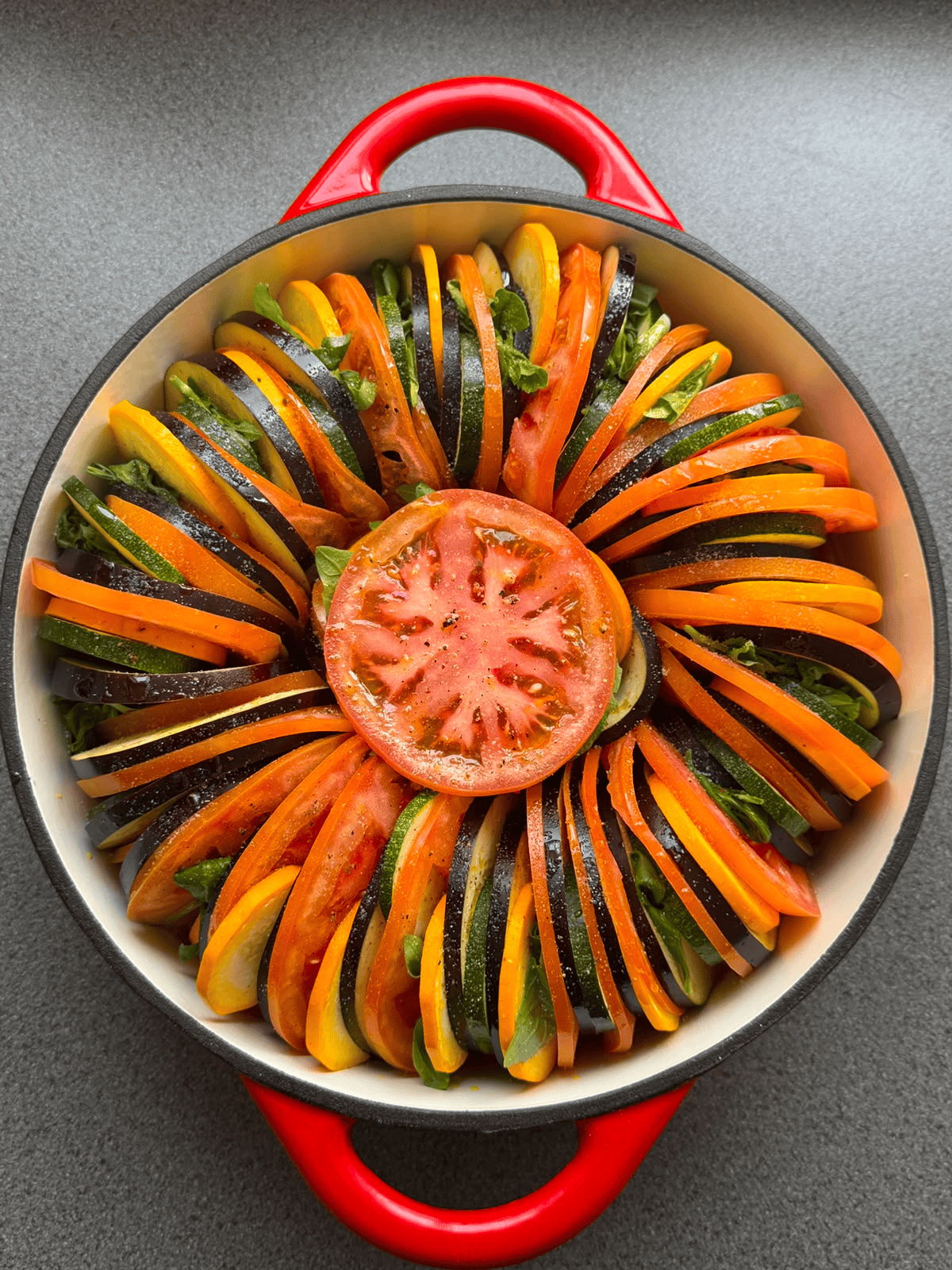
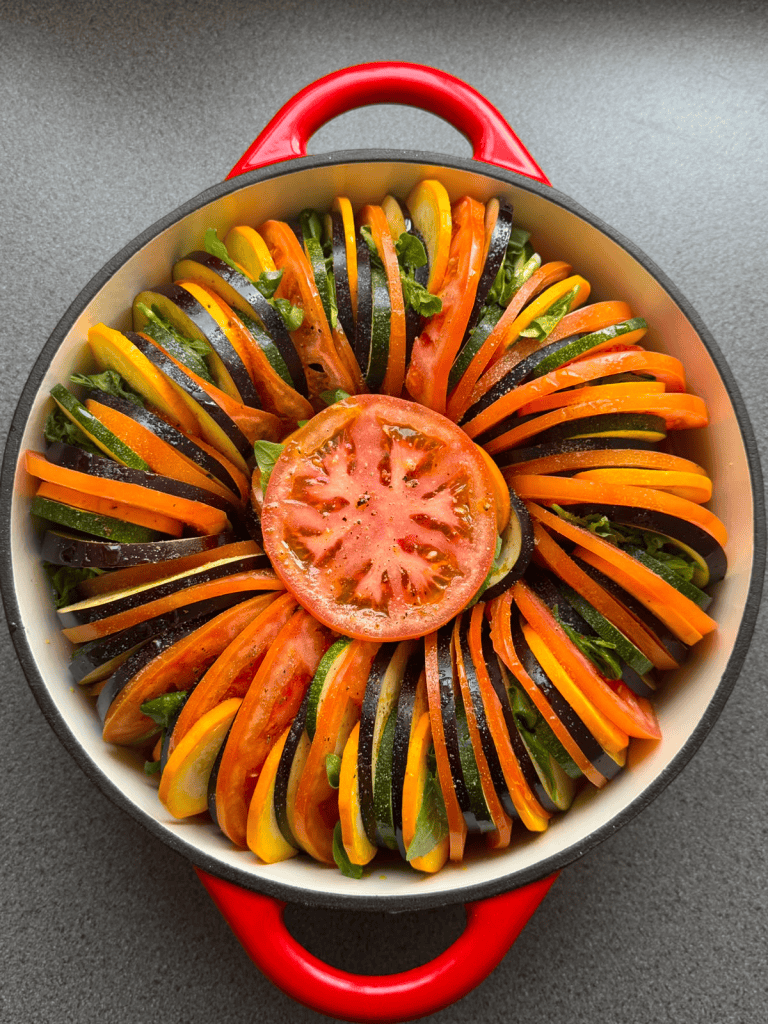
A perfect tomato in summer.
A wild mushroom in autumn.
A freshly landed fish.
A ripe peach.
French cooks have long understood something that can sometimes become lost in modern cooking. Technique exists to support ingredients, not overshadow them.
The goal is rarely to demonstrate what the cook is capable of. The goal is to reveal what the ingredient is capable of. This idea appears repeatedly throughout classical and contemporary French cooking.
A sole meunière is little more than fish, butter and lemon.
A simple salad of tomatoes requires almost no technical skill.
A roast chicken remains one of the most celebrated & most delicious meals despite its apparent simplicity.
What unites these dishes is not complexity. It is confidence. Confidence in the quality of the ingredients and restraint in how they are treated.
As cooks, there is often a temptation to add.
Another garnish.
Another component.
Another technique.
French cuisine frequently encourages the opposite approach. It asks whether anything more is actually necessary.
The Difficulty Of Simplicity
One of the reasons French food continues to resonate is because it embraces a truth that many cooks eventually discover.
Simple food is often the hardest food to execute well. Complexity can disguise mistakes. This is why chefs really appreciate restaurants like St John or more recently, Swansea’s The Shed (opened by Jonathan woolway, a legend of the St John restaurant Group) because they have the understanding the good food doesn’t need bells & whistles, it just needs to be delicious!
A heavily garnished plate offers countless places for imperfections to hide. Simplicity offers nowhere to hide at all.
A perfectly cooked piece of fish.
A well-made tart.
A bowl of onion soup.
These dishes appear uncomplicated but achieving excellence within them requires precision, discipline and experience. Every decision becomes visible & every flaw becomes obvious. This pursuit of simplicity is perhaps one of the most enduring characteristics of French cooking.
Not because French food is always simple; It isn’t. But because even its most elaborate expressions are often guided by the belief that clarity is preferable to confusion.
The ingredient should remain recognisable.
The flavour should remain understandable.
The cooking should have purpose.
That philosophy feels just as relevant today as it did centuries ago.
The Trends Will Continue
The future of food will undoubtedly bring new ideas.
New techniques.
New technologies.
New movements.
Some will fade quickly. Others will influence kitchens for decades. The landscape of modern dining will continue to evolve as it always has. Yet French cooking seems uniquely positioned to endure alongside those changes. Not because it resists progress. But because it is built upon principles rather than fashions.
Respect the ingredient.
Understand the technique.
Value consistency.
Know when to stop.
These ideas are not particularly glamorous. They rarely generate headlines. But they continue to shape the way great food is cooked.
Perhaps that is why French cuisine remains so influential. Not because it refuses to change, but because the foundations upon which it was built remain remarkably difficult to improve upon.
Tom
Chef & Owner, Bohémien