A few weeks ago, I wrote an article about some of the easiest ways to ruin good food.
One of the points I made was about seasoning. Or perhaps more accurately, what many people think seasoning is. The phrase gets used constantly in cooking.
“Needs more seasoning.”
“Season to taste.”
“Well seasoned.”
But I’ve often found that people use the word seasoning when what they actually mean is flavour. To me, they’re not quite the same thing. In fact, I only really consider two things to be seasoning:
Salt and acid.
Everything else falls into a different category.
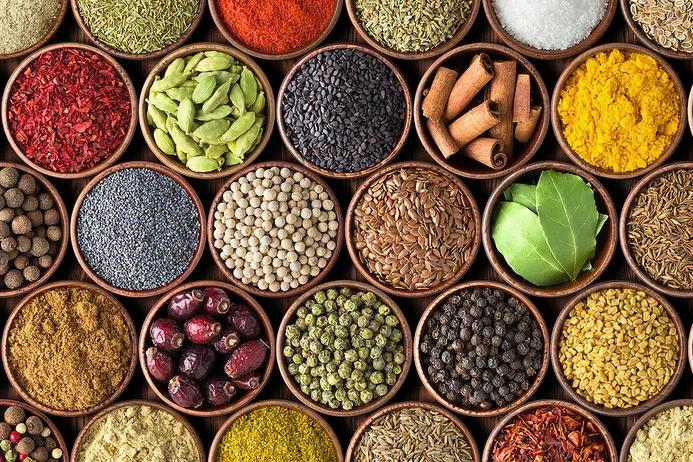
Spice.
Now before anyone gets upset, this isn’t me declaring war on pepper.
Or paprika, or cumin, or any of the hundreds of spices that have transformed cuisines around the world. I use spices myself, I love spices. Indian & Bangladeshi food is a firm favourite in our house and I don’t think there’s a cuisine anywhere that demonstrates the intelligent use of spice better.
But I think it’s important to understand what spices are actually doing.
Because they aren’t seasoning.
They’re changing flavour.
Salt is different.
Salt doesn’t make a tomato taste like something else. It makes it taste more like tomato. The same is true of a strawberry or a potato or a piece of fish.Salt enhances what is already there. It reveals flavour.
Acid works in a similar way.
Whether it’s lemon juice, vinegar or a splash of wine reduced into a sauce, acidity sharpens flavours and brings them into focus. Good seasoning doesn’t distract from ingredients, It amplifies them. That’s why I often say that seasoning should make food taste more like itself.
Spices do something entirely different.
Spices introduce flavour. They bring aromas, bitterness, sweetness, warmth and complexity that weren’t present in the original ingredient. That’s not a criticism. It’s simply a different job. A carrot seasoned with salt still tastes like carrot. A carrot heavily flavoured with cumin becomes something else entirely. Neither approach is wrong. But they’re not the same thing. And that’s why you’ll rarely find me reaching automatically for salt and pepper.
The pairing has become so normal that most people don’t question it. Maybe it’s my OCD, maybe it’s because I’m a pedantic so & so, but I do.
Salt enhances flavour.
Pepper changes it.
Sometimes that’s exactly what’s needed & sometimes it isn’t.
French cooking has always had an interesting relationship with spice. Historically, spices were symbols of wealth and status. In medieval Europe, they appeared in huge quantities. Cinnamon, cloves, nutmeg and pepper were used far more aggressively than they are today. But over time, French cuisine moved in a different direction. The focus shifted towards ingredients, technique and sauce.
Stocks became more refined.
Sauces became more delicate.
Seasonality became more important.
The role of spice became smaller.
Not because French cooks didn’t understand spice. Because they became more interested in revealing natural flavour than covering it. You can see that philosophy throughout classical French cooking.
Traditionally, a beurre blanc contains no spices.
A velouté contains no spices.
A sauce gribiche contains no spices.
Yet each one is capable of transforming a dish. At Bohémien, that’s generally how we approach food too. Most of the time, we’re trying to make ingredients taste more like themselves.
If we’re serving Pembrokeshire Earlies, I want them to taste of potatoes.
If we’re serving asparagus, I want you to taste asparagus.
If we’re serving Welsh lamb, I want the flavour of the lamb to remain at the centre of the dish.
That’s where salt and acid do their best work. They’re supportive, not dominant.
But that doesn’t mean spice doesn’t have a place, far from it. Used properly, spice can be extraordinary. The key phrase there is “used properly.” One of the biggest mistakes I see is treating spices like seasoning. People sprinkle them in at the end and expect them to perform miracles. Cooking doesn’t work like that.
Spices need time.
They need heat.
They need fat.
Most importantly, they need understanding.
Indian cooking demonstrates this better than almost any cuisine on earth. What makes great Indian food so impressive isn’t the quantity of spices.
It’s the control.
The layering.
The understanding of how flavour develops over time.
Different spices are added at different stages.
Some are bloomed in oil.
Some are toasted first.
Others are added later to preserve their freshness.
Each step changes the final result. The flavour isn’t built in a single moment, it’s built gradually, layer by layer. A good curry isn’t just a collection of spices. It’s a carefully constructed sequence of flavours. That’s what so many people miss. The same principle applies in French cooking. The ingredients might be different, but the idea remains the same.
A stock develops in stages.
A sauce develops in stages.
A braise develops in stages.
Good cooking is often less about ingredients than it is about timing.
Understanding when to add something is just as important as understanding what to add.
So do I use spices? Absolutely.
Ras el hanout regularly features in my dishes.
Freshly ground pepper with game is incredible.
Spices in some form nearly always feature in my desserts.
The key is intention. I never want spice to become background noise, I want it to have a purpose. A reason for being there.
Perhaps that’s the distinction. Seasoning should reveal flavour.
Spice should contribute flavour.
Both matter, both have a place, but they’re doing different jobs.
And understanding that difference is one of the simplest ways to become a better cook.
Tom
Chef & Owner, Bohémien