There is a particular kind of panic that only a kitchen can produce.
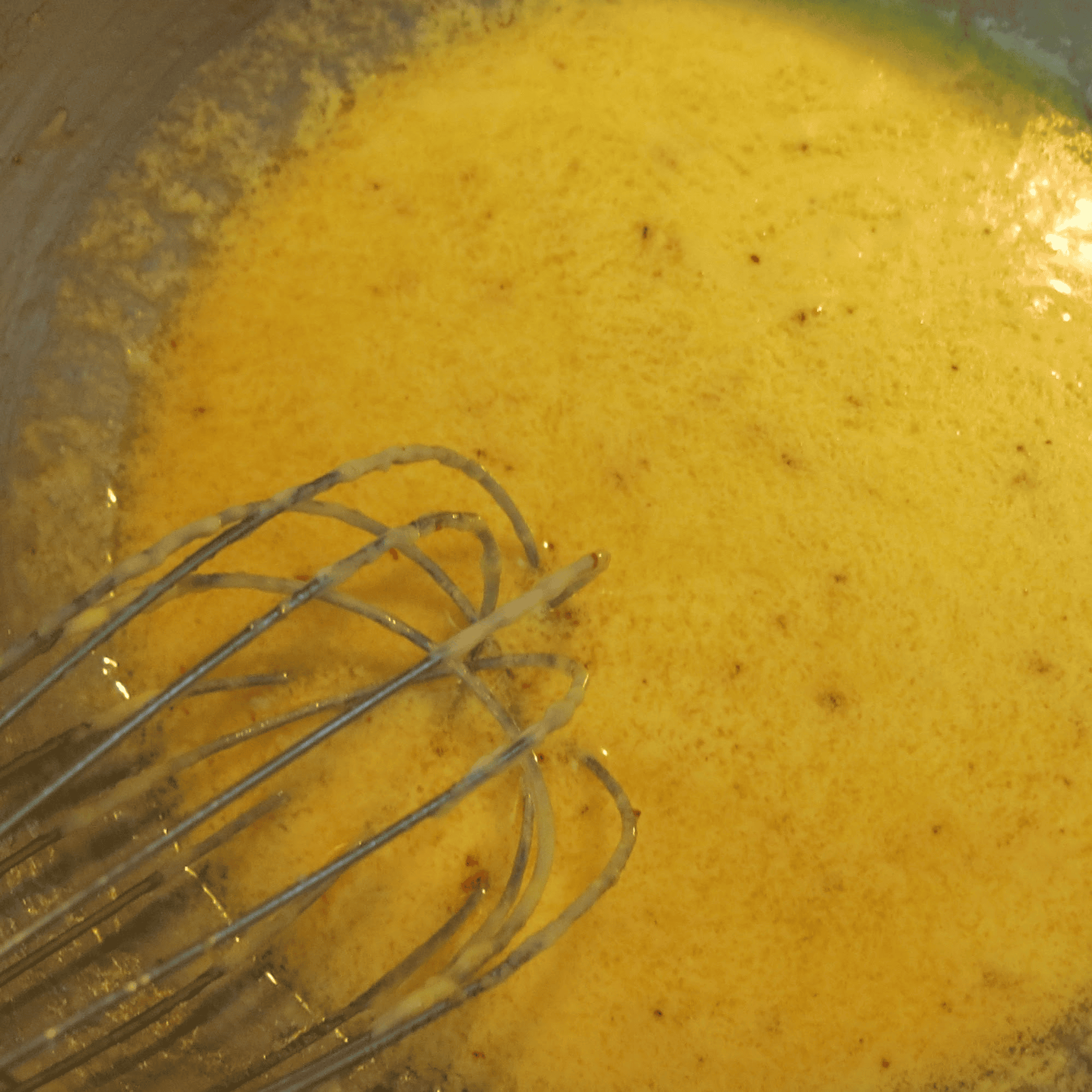
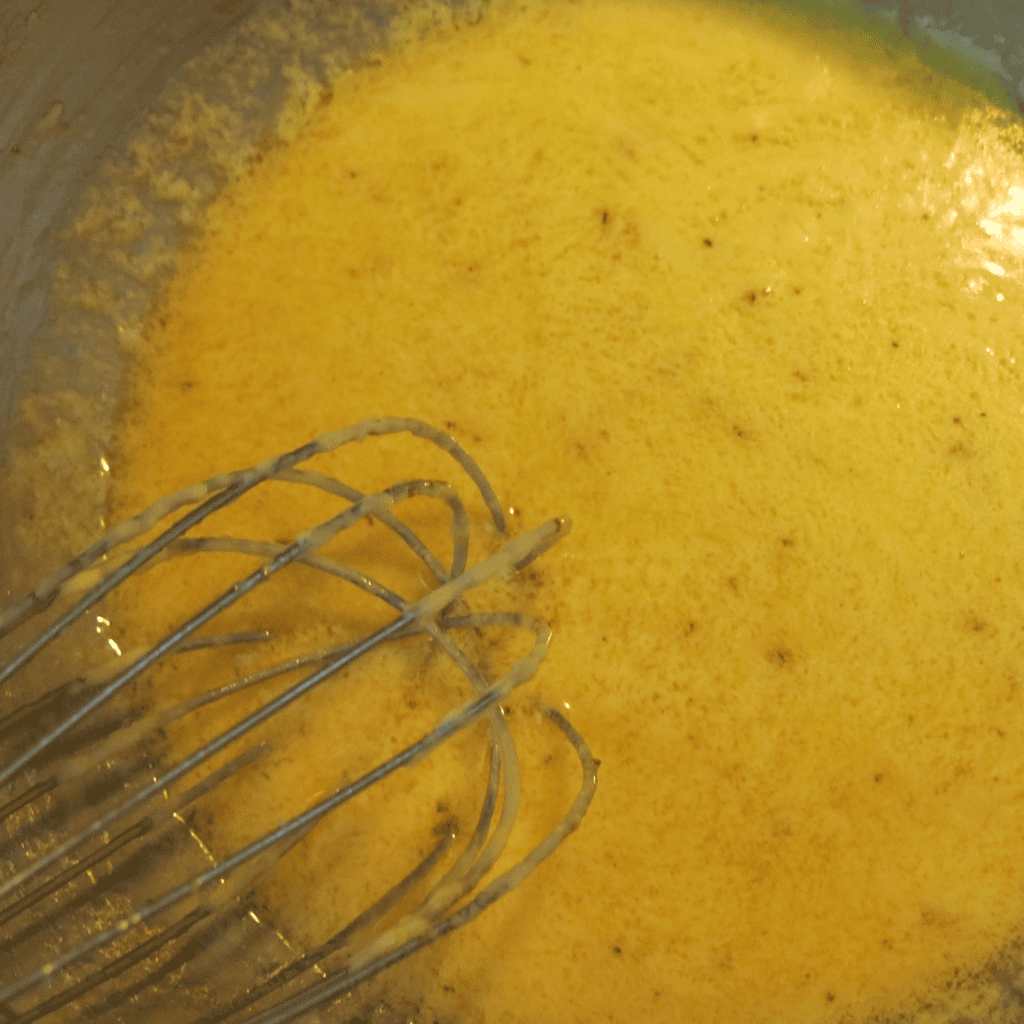
The plates are waiting. Someone is calling for the next course. The pass is full, the kitchen is hot, and every second seems to count. Then you look down at your saucepan. Your hollandaise has split.
What was moments ago a beautiful, glossy emulsion is now a greasy, yellow mess. Butter floats on the surface. The sauce looks curdled, broken and utterly unfit for the plate. You whisk harder, hoping it will somehow come back together, but it only gets worse.
For a brief moment, everything stops. Then the swearing begins.
Every cook knows this feeling. It doesn’t matter how experienced you are, how many services you’ve worked or how confident you feel in your own abilities. When something goes wrong at precisely the wrong moment, your stomach still drops. And yet, I’ve come to think that some of the most interesting things in cooking begin with exactly these moments.
Not the perfect sauce. Not the dish that comes together exactly as planned. But the mistake. The unexpected result. The moment when something breaks and you’re forced to decide what happens next.
Because a broken sauce isn’t always the end of the story. Sometimes, it’s where the interesting bit begins. What does it mean to make a mistake in the kitchen? Professional kitchens place an enormous amount of value on consistency, and rightly so. If you’re cooking for other people, you have a responsibility to give them food that is properly prepared, safe to eat and worth their time and money. Technique matters. Precision matters. Understanding your ingredients matters. But I think there is a difference between striving for consistency and expecting perfection.
The problem with perfection is that it leaves very little room for curiosity. It encourages us to see anything that falls outside the plan as a failure. A sauce splits, so it goes in the bin. A vegetable cooks for too long, so it’s wasted. A dish doesn’t look the way we imagined it, so we start again.
Sometimes, of course, that’s the right decision. If something is burnt beyond saving, tastes unpleasant or has been handled unsafely, there’s no clever culinary philosophy that will make it suitable to serve. But not every mistake deserves the same fate. A split mayonnaise is still made from oil, egg yolk and whatever seasoning you added. An over-reduced stock is still full of flavour. A piece of fruit that has become too soft to serve neatly might be perfect for a compote.
The ingredients haven’t necessarily become worthless. They’ve simply ended up somewhere you didn’t intend them to be. And that distinction matters.
Cooking is a process of transformation. We apply heat, pressure, acidity, salt, fat and time to ingredients, constantly changing their structure, flavour and texture. Sometimes those changes are deliberate. Sometimes they’re accidental. Either way, something has happened.
The question is whether we understand what has happened well enough to do something useful with it. For me, that’s one of the most important differences between following a recipe and actually learning to cook. A recipe tells you what should happen. Experience teaches you what to do when it doesn’t.
When accidents become part of culinary history
Some of the most famous stories in French cooking involve precisely this idea: something unexpected happening, followed by someone recognising that the result might be worth keeping.
There are plenty of these stories in culinary history. Some are better documented than others, and many have acquired a little mythology along the way. But I find them fascinating, not simply because they make good anecdotes, but because they remind us that cooking has never been a completely controlled science. It has always involved observation, instinct and a willingness to work with what is in front of you.
Ganache: an accident in a bowl of chocolate
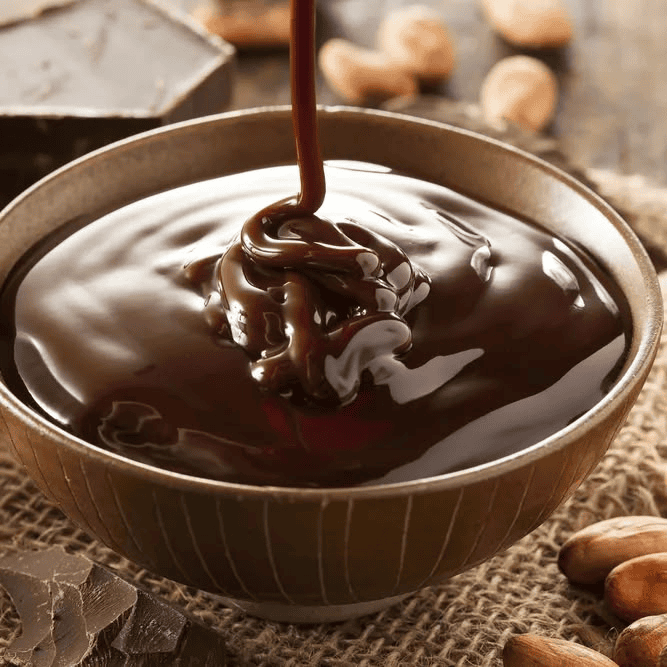
Take ganache, that wonderfully versatile mixture of chocolate and cream used in everything from truffles to tarts, cakes and desserts.
One popular French culinary legend places its origins in nineteenth-century Paris. A young apprentice, so the story goes, accidentally poured hot cream into a bowl of melted chocolate. His furious master supposedly called him a ganache, a French insult meaning something along the lines of a fool or a blockhead.
The apprentice had made a mistake. The master was unimpressed. And yet, as the cream and chocolate were stirred together, something rather beautiful began to happen. The mixture became smooth, glossy and silky.
Today, ganache is a fundamental preparation in pastry kitchens around the world.
Whether the apprentice story is true is another matter. Its exact origins are difficult to establish with certainty. But the underlying principle is very real. Chocolate and cream, handled properly, form a stable emulsion. Fat, water and the other components of the chocolate combine to create a texture that is entirely different from either ingredient on its own.
The interesting part isn’t that someone accidentally mixed two ingredients together. It’s that the result revealed a useful relationship between them. A mistake became a technique.
Crêpes Suzette: when dessert caught fire
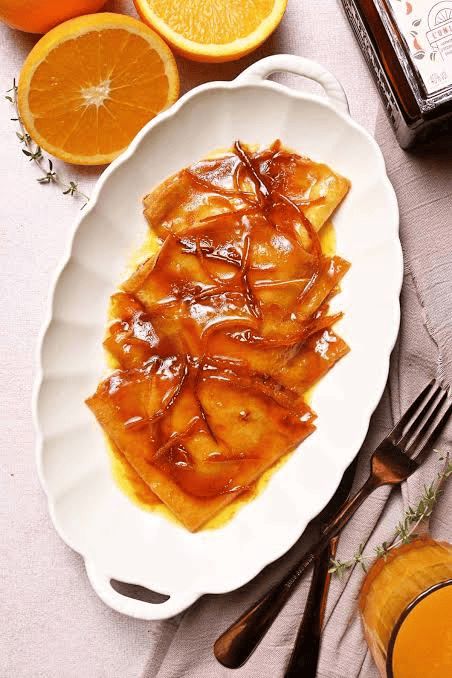
Then there’s Crêpes Suzette, one of the great classics of French dessert cooking.
The best-known origin story centres on Henri Charpentier, who was reportedly a fourteen-year-old apprentice working in Monte Carlo in 1895. According to his own later account, he was preparing a dessert for the Prince of Wales, the future King Edward VII, when a sauce containing citrus, sugar and liqueur caught fire.
Rather than simply ruining the dish, the flames helped caramelise the sauce and concentrate its flavours. The result was served over crêpes and became associated with the name Suzette.
The details of the story have been debated, and Charpentier’s precise role in the dish’s invention isn’t universally accepted. But the tale has endured because it captures something familiar to anyone who has spent time around a stove.
Heat can be unpredictable. It can also be transformative. When sugar caramelises, it develops complex flavours that aren’t present in the original ingredient. Citrus brings acidity and aromatic oils. Butter adds richness. The liqueur contributes its own character. Together, they create a sauce that is far more interesting than a simple mixture of sweet ingredients.
Of course, there’s a difference between deliberately flambéing a sauce and accidentally setting fire to your dessert. I’m certainly not suggesting we should start encouraging kitchen fires in the pursuit of culinary discovery. But Crêpes Suzette illustrates an important point: a process that initially appears destructive can sometimes produce a depth of flavour that would otherwise be difficult to achieve.
The trick is understanding the difference between controlled transformation and simply burning the bloody thing.
Roquefort: when time does the work
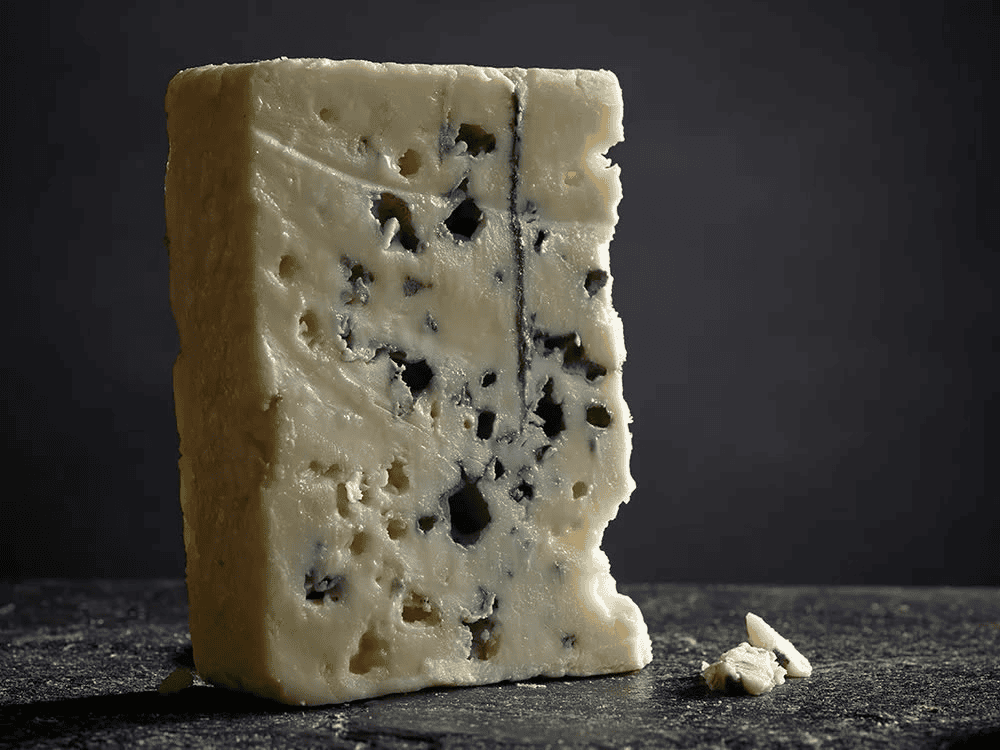
Perhaps my favourite example is Roquefort.
The legend tells of a young shepherd who left his meal of bread and sheep’s milk curd in a cave while he went off in pursuit of a girl (we’ve all been there right!?). When he returned weeks later, the food had been transformed by blue mould. What he found was supposedly the beginning of one of France’s most celebrated cheeses.
It’s a lovely story. Whether the shepherd existed, or whether the cheese was discovered in quite such a romantic fashion, is impossible to establish from the legend alone. What we do know is that Roquefort has a long history, and that its characteristic blue veining comes from the mould Penicillium roqueforti. Under the right conditions, this mould helps develop the cheese’s distinctive flavour and texture.
What might look like spoilage in one context becomes the defining characteristic of an extraordinary ingredient in another.
That doesn’t mean all mould is desirable, or that forgotten food in a damp cupboard is an exciting new cheese waiting to happen. There are very good reasons food safety matters. But the broader lesson is worth considering. Sometimes, what we initially perceive as a flaw is actually part of the transformation that makes something valuable.
These three stories are very different, but they share a common thread. An unexpected change occurred, and someone either recognised or eventually understood the potential in the result. That is where experience becomes so important.
Anyone can follow instructions when everything behaves as expected. The real skill lies in knowing what you’re looking at when it doesn’t.
The difference between a mistake and a waste
I think this is particularly relevant to the way we approach food today.
We have become very good at creating systems that promise consistency. Recipes are tested. Processes are standardised. Ingredients are measured to the gram. Temperatures are monitored. All of that has its place, especially in professional kitchens. But somewhere along the way, I think we can lose sight of the fact that cooking is also a practical, sensory craft.
You need to taste. You need to look. You need to smell. You need to understand how ingredients behave, rather than simply hoping they behave as the instructions say they should. And you need to be prepared to change direction.
Imagine you’ve made a beautiful chicken stock. You reduce it carefully, but take it a little too far. It becomes intensely concentrated, almost sticky, and much too powerful to serve as a sauce in its current state.
Is it ruined? Not necessarily. You might dilute it. You might use a small amount to enrich another sauce. You might turn it into a glaze, where that concentration becomes an advantage rather than a problem.
The ingredient hasn’t failed. Your original plan has. Those are two very different things.
Of course, there are limits. A stock that has become bitter from scorching can’t necessarily be rescued. A sauce that has been contaminated isn’t made safe by clever seasoning. And a dish that genuinely tastes bad shouldn’t be served simply because you’ve invested time and money in it.
I’m not advocating making excuses for poor cooking. Quite the opposite. I’m suggesting that understanding your ingredients properly gives you more options, not fewer. It allows you to make better decisions about what can be saved, what needs changing and what genuinely needs to be thrown away.
That is both better cooking and a more thoughtful approach to food waste.
How I actually rescue a broken sauce
Let’s return to that hollandaise. You’ve got butter separating from the egg yolks, the sauce looks greasy, and service is waiting. The first thing I’d do is stop adding heat and assess what’s happened.
A hollandaise is an emulsion. Egg yolks contain emulsifying compounds, including lecithin, that help disperse tiny droplets of fat through a water-based mixture. When the balance between fat, water, temperature and agitation goes wrong, those droplets can separate and the sauce breaks. Understanding that gives you a way back.
Sometimes, a few drops of cold water are enough to bring a slightly broken hollandaise together. The extra water helps restore the balance between the fat and the liquid phase. A little gentle whisking can then encourage the emulsion to reform.
If it’s properly split, I’d take a clean bowl and start with a fresh egg yolk and a little water. I’d whisk that together, then gradually add the broken sauce, a little at a time, as though I were making the emulsion from scratch.
The key is patience. Add the mixture too quickly and you risk overwhelming the yolk’s ability to emulsify the fat. And if the sauce has become too hot, I’d take it away from the heat before doing anything else. More aggressive whisking won’t fix every problem, particularly if the egg proteins have coagulated beyond recovery.
Mayonnaise works on a similar principle. If it splits, a fresh yolk or a small amount of water in a clean bowl can provide the starting point for rebuilding the emulsion. Slowly whisk in the broken mayonnaise, allowing the oil to disperse properly as you go.
None of this is magic. It’s simply an understanding of what the ingredients are doing. And that’s what I love about classical technique. It isn’t about making cooking unnecessarily complicated. It’s about understanding the principles well enough to solve problems when they arise.
But rescuing a sauce isn’t always the answer. Sometimes the better decision is to stop trying to recreate what you originally intended and find another use for what you’ve got.
Take a vegetable purée that’s been cooked a little too aggressively. If the vegetables have developed a pleasant, smoky, deeply roasted flavour, you might be able to turn that into something quite different: a dark vegetable sauce, perhaps, balanced with stock, acidity and a little butter.
The result won’t necessarily resemble the purée you intended to make. It doesn’t have to. If, however, the vegetables are genuinely blackened and bitter, there’s no reason to pretend you’ve discovered something wonderful. Some flavours can’t be rescued, and recognising that is part of being a good cook, too.
The important thing is to make a decision based on the ingredient in front of you, rather than the frustration of knowing you’ve made a mistake. That takes practice. It also takes a little humility.
You have to be willing to admit that your original idea isn’t working, put your ego to one side and ask a more useful question: What can I make from this now?
Learning to cook without being afraid of getting it wrong. I think there’s a wider lesson here, particularly for anyone working in food professionally. When you run your own kitchen, the mistakes feel personal. You’ve chosen the ingredients. You’ve developed the menu. You’ve put your name to the food. If something goes wrong, it’s very easy to take it as a reflection of your ability.
I’ve certainly felt that pressure. But I don’t think you become a better chef by never making mistakes. You become a better chef by understanding why they happened, learning from them and becoming more capable of dealing with them the next time.
Sometimes that means saving a sauce. Sometimes it means changing a dish halfway through preparation. Sometimes it means accepting that something isn’t good enough and starting again. And sometimes, it means laughing at yourself, having a quiet swear in the kitchen and getting on with it.
The same applies to running an independent culinary business. Things don’t always go to plan. Suppliers let you down. Equipment breaks. An event takes an unexpected turn. An idea you were convinced would work doesn’t quite land. You can spend weeks planning something, only to discover that reality has other ideas.
You can either spend all your time being frustrated that things aren’t happening exactly as you imagined, or you can learn to respond to what’s actually happening in front of you. That doesn’t mean lowering your standards. It means understanding that high standards and adaptability aren’t opposites. In fact, they’re often dependent on one another.
The best chefs I’ve worked with haven’t been the ones who never encountered a problem. They’ve been the ones who could look at a difficult situation, understand it quickly and make a sensible decision without allowing panic to take over.
That’s a skill worth developing in any kitchen. And perhaps outside one, too.
There’s beauty in the broken bits
I still believe in proper technique. I believe in taking care over ingredients, understanding the details and trying to get things right. But I also believe that cooking becomes a much more interesting pursuit when we stop treating every unexpected result as a disaster.
A broken sauce might teach you more about emulsions than a hundred perfectly made ones. An over-reduced stock might show you a new way to concentrate flavour. An ingredient that doesn’t behave as expected might force you to think differently about a dish.
Not every mistake leads to something brilliant. Most don’t. And we shouldn’t romanticise failure simply for the sake of it. But there is value in being curious about what went wrong, rather than immediately reaching for the bin. For me, that is one of the great pleasures of cooking. It’s a craft built on knowledge and technique, but also on observation, instinct and the ability to adapt.
You can plan a dish down to the smallest detail. You can measure everything, control the temperature and follow every step correctly. And sometimes, the sauce will still split. When it does, you have a choice. You can panic. You can throw it away. You can decide the whole thing has gone wrong. Or you can take a breath, look at what’s in front of you and work out what happens next.
Because good cooking, as in life, isn’t about making sure nothing ever goes wrong. It’s about knowing what to do when it does. And whether you’re standing at a busy restaurant pass or trying to build something of your own, that might be one of the most useful lessons you can learn.
Tom
Chef & owner, Bohémien

