I don’t collect cookbooks to display them. Mine are splattered, bent, and falling apart. Which to be honest, is how you know they’re good.
The ones I really love & keep coming back too are stained, dog-eared, cracked at the spine and usually open on a page that’s been cooked from dozens of times. They’re not aspirational objects to be gawped at, they’re tools, teachers & quiet companions in the kitchen.
Over the years, certain books have shaped how I cook, how I think about food, and more importantly, how I feel about it. Many of them were written long before Instagram, before micro herbs, before food became performance art & chefs became celebrities beyond their own pass.
These are the books that helped form my cooking and by extension, Bohémien.
French Country Cooking – The Roux Brothers
If you want to understand French food properly, start here.

This book was written in a time where cookbooks weren’t about chasing trends or going viral. It’s a book showing the roux brothers incredible interpretation of classic regional cooking however, it also explains France through its regions. Each region is explained through the food people actually cook and eat. It shows you why dishes exist, not just how to make them. Climate, geography, agriculture, history, practicality, it’s all there on the plate. The dishes that come from the practicality of a particular terroir are the ones that I really love. The stories behind them not just merely interesting but add layers of context and story behind the dishes which can only make eating them a more joyful experience.
Bouillabaisse from Marseille created by fishermen to use up fish that couldn’t be sold at the market. Cassoulet created to use preserved high calorie foods to feed the rural workforce in the southwest. Panade in Lyon using stale bread in broth made from scraps, born from nessecity. Coq au Vin in burgundy, a way to make a tough, old rooster edible by slow-cooking it for hours in wine that’s plentiful in the region.
These are the stories shared in this book and shown at there best by the best chefs of their generation.
For anyone serious about French cooking, this book is foundational, authoritative & Hugely important.
White Heat – Marco Pierre White
The best cookbook ever written
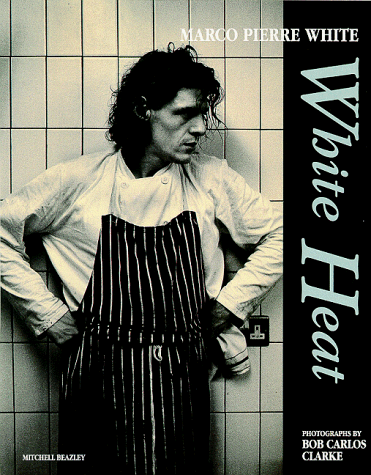
White Heat isn’t just recipes, it’s sexy, it’s attitude & confidence. Bob Carlos’s photography is beautiful and timeless. The dishes are deeply considered & creative. You can see the amount of work gone into each plate.
The food is classical French but it takes what has come before a step further. Whether it’s Marcos interpretation of khoffmans classic pig trotter, the tagliatelle of oysters with caviar, roasted chalans duck with blood sauce or something as simple as a perfect lemon tart. This is, as Marco ever so humbly calls it, “the food of the gods”
This book really did change everything.
It made people realise that great cooking wasn’t made by big red cheeked blokes with tall hats smiling while gliding arond a kitchen.
It’s hard, dirty, sweaty work.
It’s long unsociable hours.
It can be painful both physically and mentally.
Kitchen life isn’t all smiles and handshakes. It’s proper, hard graft.
Marco doesn’t shy away from that & it’s truly one of the most honest reflections of this industry ever written and still remains incredibly relevant in 2026.
Whatever you think about the man himself, the culture he created, the way he treated his staff or any other of the plethora of things you could throw at him, I would say if there’s one book every professional cook should own, this is the one. It is & I think always will be, my favourite Book.
Nose to Tail Eating – Fergus Henderson
This book didn’t just influence how I cook. It influenced how I think.

Nose-to-tail eating isn’t a trend, it’s common sense. Respecting an animal means using it properly and using every part. Fergus Henderson articulated that philosophy better than anyone, and did it with generosity and humour.
The food in this book is honest, British, deeply satisfying, and unapologetically itself. St. John showed that restraint and respect can be radical.
From the roast bone marrow & parsley salad, grilled lambs heart, braised pigs head, to the incredible encyclopaedia of classic British puddings in this book. This book champions an idea and has an opinion. That idea changed cooking in Britain forever and is essential reading for any cook.
This is essential reading for anyone looking to cook beyond the prime cuts which, at least in my opinion, is where the more interesting & delicious foods can be found.
French Provincial Cooking – Elizabeth David
Elizabeth David deserves her own category.

Elizabeth David was a titan of the food writing world. She didn’t just write recipes, she changed how Britain thought about food. Her writing is elegant, confident and deeply observant. She travelled, tasted, paid attention and then wrote about food as culture, not product.
She is easily one of the most celebrated cookbook authors of all time but her books go beyond just being a book of recipes. They showcase culture & really show a place through the food cooked by the people who live there.
Similar to the roux brothers “French country cooking” this book looks at terroir & the concept of cooking with the fruits of a particular region. If you’re looking to understand classical French cookery beyond the recipes, this book is gold.
This book, like so much of her writing, celebrates regional cooking without romanticising it. It’s practical, intelligent and beautifully written. For me, among her many celebrated works, this is her finest.
Larousse Gastronomique
This is the French food bible.

It’s not a book you sit down and read cover to cover. It’s a reference, a dictionary, a constant. If you want to understand classical French food properly, from the terminology, techniques, dishes, history, then this is essential reading.
While often forgotten in the modern kitchen, this encyclopaedia of French gastronomy is probably the most important ever written. It painstakingly explains the entire French repertoire in complete detail. It’s a book that the great chefs of history would have certainly referenced regularly.
It quite literally notes every classic sauce, dish or technique you could need to cook classic French cuisine. While many of these books listed here will have interpretations or chefs own takes of dishes, this giant book shows them as they were intended in their original form. While chefs today may not cook directly from this book, I can guarantee anyone cooking French food today is cooking something that is at least in some form inspired by what’s written in this book.
Every serious kitchen has a copy of this book & so should every serious chef.
Vegetables in the French Style – Roger Vergé
Masterful vegetable cookery
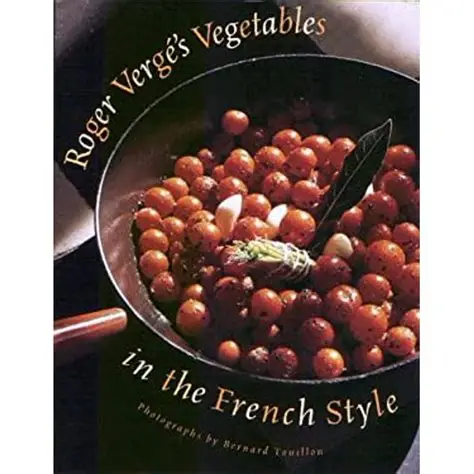
This book teaches more about vegetable cookery than almost anything else. Not tricks. Not garnishes. Actual cooking.
Roger Vergé, a pioneer of nouvelle cuisine and Provençal cooking, championed vegetables in this book. They are central to the dish rather than a mere garnish. His dishes reflect the sunny flavours of Provence, a region where vegetables are really the heart and soul of the cuisine. Vergé understood vegetables as dishes in their own right, beyond being simply an afterthought.
Dishes like aubergine gratin, braised leeks, scrambled eggs with asparagus & truffles. This is a love letter to vegetables. Chefs (including myself on some occasions) are often guilty of treating vegetables as an afterthought. This drops them front and centre, showing simple techniques that help you get the most out of beautiful produce.
This is a book that at its core is about respecting the produce & getting the maximum flavour from simple ingredients.
If you want to understand how to cook vegetables properly, this book will teach you how.
The Complete Robuchon
The life’s work of a culinary titan
Robuchon is often remembered for his insane level of detail, precision and technique, but what people often overlook is just how good his food tasted.
Yes, the technique is there. Yes, it’s very classical & at times very tedious. But underneath it all are brilliant flavour pairings and deeply comforting dishes. This book is a reminder that technical mastery should serve flavour, not overshadow it.
This book showcases a real cross section of his recipes, not just the ones that look like they belong in the Louvre. From his famed Pommes puree, the classic pot-au-feu, the sole meunière, to the Lièvre à la Royale, a very technical preparation of hare stuffed with foie gras & served with a sauce thickened with its own blood. This book has so much to offer an inquisitive cook, you just have to look for it.
There’s a reason he held more Michelin stars than anyone else.
My Gastronomy – Nico Ladenis
A quiet giant.

His cooking had a lightness and elegance that was ahead of its time. This book reflects that confident, restrained, deeply French cookery without being showy.
He was a huge influence on London dining in the latter part of the 20th century, even if he doesn’t always get the credit he deserves. He was, after all the first chef to achieve 3 Michelin stars who wasn’t classically trained, he willed it from sheer determination. Regardless of what you may think of the Michelin star system, you have to respect that.
I always think of his cooking as being very light, with an emphasis on clarity of flavour. His recipes often make an appearance on Bohémien plates. From his intricate terrines, his clean sauces, his use of spices & olive oil (no doubt a nod to his Greek heritage) his cooking was significantly ahead of its time.
Part biography, part cookbook, either way this book is definitely worth seeking out.
The Nouvelle Cuisine of Jean & Pierre Troisgros
The Troisgros brothers changed the direction of modern cuisine.

This book captures that moment. Lighter sauces, clarity of flavour, precision without excess. Nouvelle cuisine often gets misunderstood now, but at its best it was about removing unnecessary weight and letting ingredients speak.
Nouvelle classics the brothers created such as their Escalope de saumon à l’oseille (salmon with sorrel sauce to you & me) are absolutely timeless. This book showcases that shift in thinking that really is what brings French cooking the where it is today. People don’t describe food as ‘Nouvelle’ anymore but so much of what is cooked in the great kitchens of the world today is, in fact ‘Nouvelle Cuisine’
There’s a lot to learn here, especially about balance & lightness of touch.
Too Many Chiefs, Only One Indian – Sat Bains
This book mattered to me at exactly the right time.
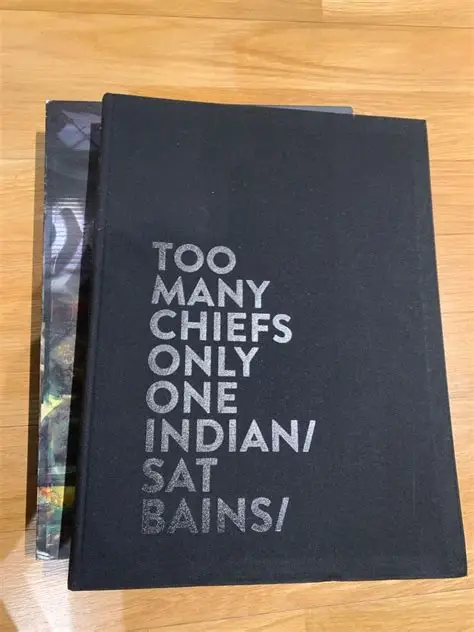
Now this may seem a little out of place on this list. It isn’t a book charting the classics of French gastronomy. However, it is a book charting one chefs journey to achieving success and getting to a point where he is considered easily one of the greatest ever chefs to cook in Britain. Sat’s focus on flavour over fluff, his clarity of thought, and his honesty about cooking were hugely influential when I was younger.
It’s a big, expensive book (I think I paid around £100 for this back when I was a very young cook) and it is absolutely worth every penny.
It’s not French, but it reinforced something important: technique is meaningless without taste & Sat is indeed up there as one of the most influential chefs in British history.
The list of his namesake restaurant “Restaurant Sat Bains with Rooms” alumni is vast & impressive (& includes arguably wales’s greatest ever chef, Gareth Ward of 2* Ynyshir)
His no bullshit approach really left an impression on me as a reader & as a cook. This book shows how to think about flavour and isn’t that what matters most. He is probably the one chef that I wished I could have worked for above any other when I was learning my trade.
Final Thought
I don’t believe good cooking comes from chasing what’s new.
It comes from understanding what came before, learning from it, and applying it with honesty. These books teach restraint, confidence, respect for ingredients and the importance of flavour above all else.
They still sit on my shelves.
They still get used.
And they still inform how I cook at Bohémien today.
There’s an absolute treasure trove of books out there for cooks in any capacity to learn from. Often these can be picked up for next to nothing. My advice to anyone wanting to learn would be to get your hands on some really quality books (like these mentioned here) and study. You can learn a hell of a lot more this way than you ever will swiping though the Instagram page of whatever restaurant is popular at the moment.
If you’re building a kitchen library or looking to learn, you wont go far wrong by starting with these books.
Tom
Chef & Owner, Bohémien