If you spend long enough working in restaurants, you start to notice how ideas move through the industry.
A technique appears somewhere at the top, usually in a Michelin-starred kitchen with a large team, serious equipment and the time to experiment. At first it feels new & exciting, something that pushes the craft forward. Then over time, it starts appearing everywhere.
What began in a three-star kitchen filters down into other fine dining restaurants, then ambitious neighbourhood spots and eventually into bistros, pubs, and smaller kitchens trying to replicate the same effect. This trickle-down has been happening for decades. In many ways, it’s a good thing. But it does raise a question:
Just because a technique exists, does every kitchen need to use it?
Innovation vs Imitation
This isn’t unique to restaurants. You see it across many industries such as fashion, fitness & tech. Ideas start at the top and work their way down. At the top end, kitchens are built to experiment. They have the time, staff and resources to refine ideas over months, sometimes years. That’s part of what makes them important. But problems start when those ideas are lifted out of that environment and dropped into kitchens that aren’t built to support them.
Take a technique such as a sous vide egg yolk purée. This technique is now seemingly everywhere now in restaurants across the UK. I remember seeing it in a three-star kitchen years ago as something totally new and thinking it was genuinely clever, precise, controlled and used in a way that made sense within the dish. Now it seems to appear everywhere. And the question becomes:
Is technique like this actually improving the food, or are we just copying something because we’ve seen it somewhere impressive?
The same goes for things like those crispy flower tuilles that show up everywhere lately. When you’ve got the staff and the time and they may actually add something, it’s fine. But I’m seeing them more often than not on dishes and in kitchens that don’t benefit from them in the slightest. Does a pub really need (as I saw myself first hand recently) to spend time crowning a sticky toffee pudding with one? Does it add anything to that dish beyond aesthetics.
When It Works And When It Doesn’t
Some ideas absolutely deserve to filter down. Better sourcing, more attention to seasoning & stronger fundamentals. These things improve every kitchen.
Take the triple-cooked chip. Developed by Heston Blumenthal after many months of testing, it’s a process that works. It’s been adopted across the industry because it consistently produces a better result. That’s when the trickle-down works, when something can be replicated, scaled and actually improves the end product. But in other cases, techniques stop being tools and start becoming habits.
Everything gets vacuum packed.
Everything goes in a water bath.
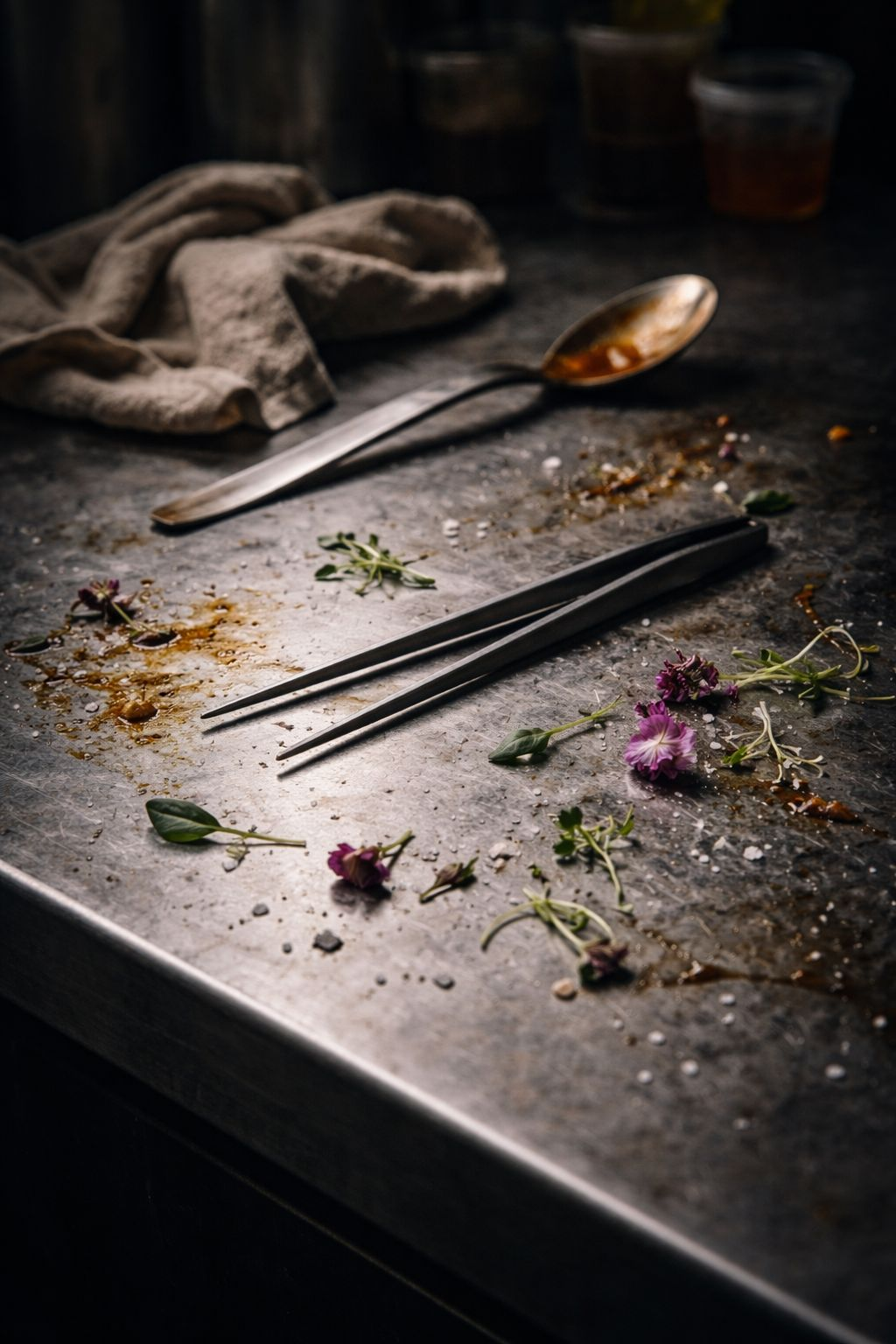
Every plate needs micro herbs or the dreaded edible flowers.
And somewhere along the way, the thinking disappears. A good cook should always ask why they’re doing something, not just whether they can.
The Aesthetic Arms Race
Presentation is another thing that’s filtered down from fine dining. There’s nothing wrong with food looking good. But somewhere along the way, complexity has started to replace quality.
You see plates covered in carefully placed herbs, flowers scattered across dishes that don’t need them, garnishes designed more for Instagram than for the person actually eating the food. Some kitchens aren’t cooking for diners anymore, they’re cooking for cameras. The irony is that the best meals are often the simplest.
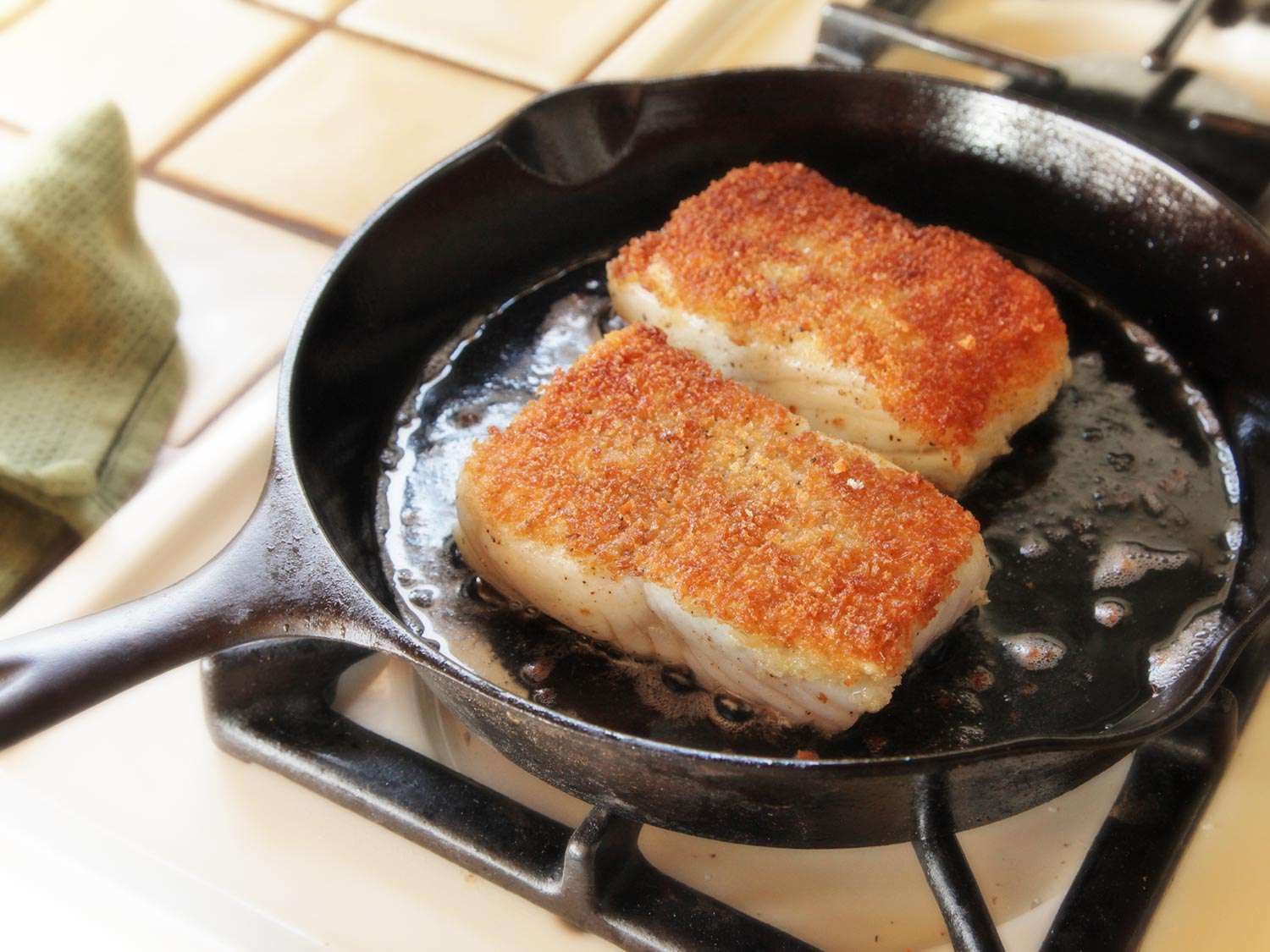
A well-cooked piece of fish with a proper sauce.
A bowl of mussels with white wine and garlic.
Roast chicken with good gravy.
They don’t need tweezers or decoration to justify themselves. They just need to taste good.
I still remember walking into a three-star kitchen for the first time. The number of chefs, the equipment, the quality of produce. It’s built for that level of detail. But in a small kitchen like a bistro, a pub, or a supper club, where often two or three people are feeding a full room, that same approach quickly becomes unrealistic.
Trying to operate beyond your means doesn’t improve the food. It just makes things harder, more stressful and ultimately less consistent. Good cooking should reflect the reality of the kitchen producing it.
Effort vs Outcome
There’s a simple question that doesn’t get asked enough: Is this making the dish better, or just more complicated?
I used to ask my cooks a simple question (and yes it’s a cringy phrase but I never pretended to be cool) “is the juice worth the squeeze”. Is it worth the time and effort that will go into an aspect of a dish to justify doing it in the first place. If that answer is no, then you move on. But that question isn’t being asked by chefs. In the right setting, technical precision can be impressive. But in smaller kitchens, it often comes at the expense of something more important:
Flavour. Consistency. Execution.
The fundamentals.
The Pressure to Perform
Social media has amplified all of this. It’s never been easier to see what the top end of the industry is doing. But it’s also created a pressure & a sense that food needs to look a certain way to be taken seriously.
Intricate. Precise. Visually perfect.
But most people aren’t looking for that. Most people aren’t dining at Michelin starred restaurants. Most people want food that tastes good, feels generous & that’s been cooked with care. Not something that looks like it belongs behind glass.
What Actually Matters
Good cooking fundamentally hasn’t really changed.
Season properly.
Cook things correctly.
Use good ingredients.
Pay attention.
Everything else is secondary.
That doesn’t mean there’s no place for creativity. But it should support the food, not distract from it. There’s nothing wrong with being inspired by great restaurants. I’d be lying if I said I haven’t been influenced by some of the best kitchens and chefs out there. But there’s a difference between learning from something and trying to imitate it.
The best kitchens understand their strengths and their limitations. They cook food that makes sense for their team, their space and their guests. They don’t try to be something they’re not. Not everything that starts at the top of the industry needs to be adopted everywhere else. Sometimes the best thing a kitchen can do is strip things back & focus on what actually matters. Cook food that people genuinely want to eat.
Good restaurants don’t need to copy the tricks of three-star kitchens. They just need to cook well. And sometimes that means remembering that flavour matters far more than technique.
Tom
Chef & Owner, Bohémien